Cutting Ribbon with Scissors: Which Pair and How to Get a Clean Cut
- Author: Ceremonial Scissors Guide Editorial Team
- Published on
- Category: Safety
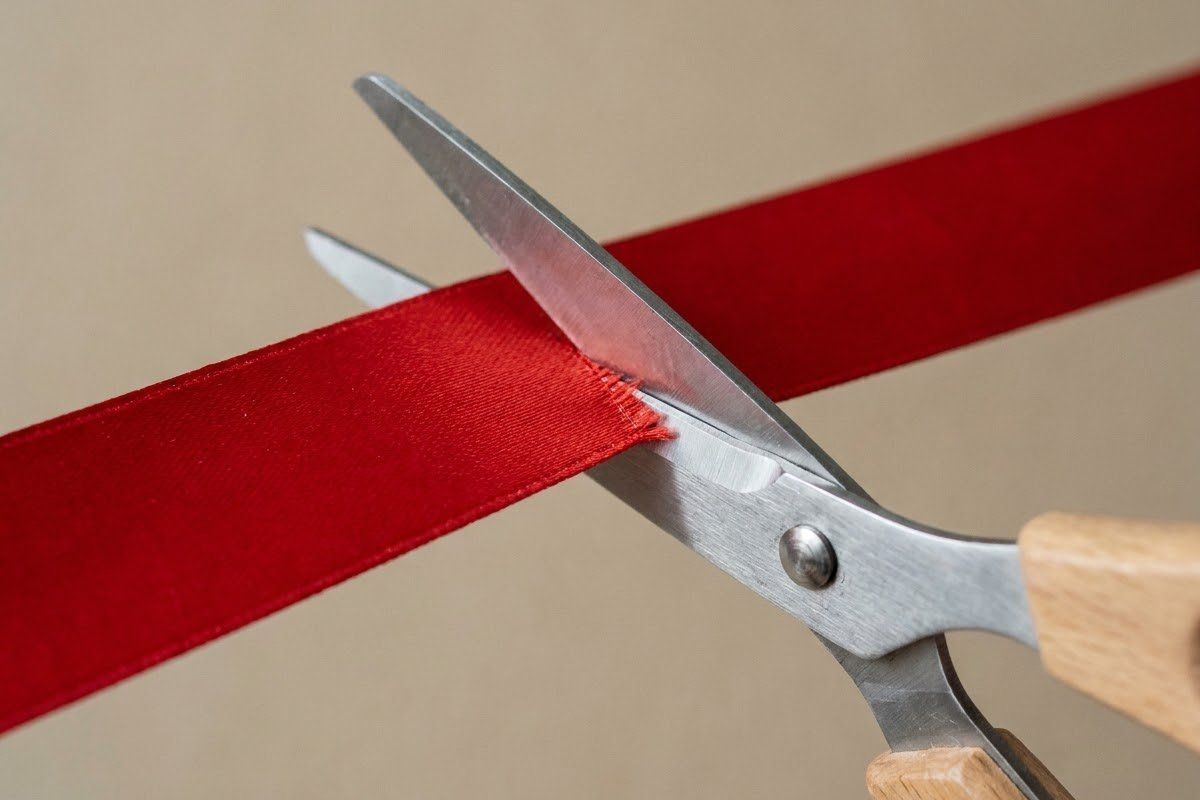
To cut ribbon cleanly, use sharp, well-aligned blades, hold the ribbon under light tension, put it deep in the blades near the pivot, and close in one smooth motion. Everyday fabric scissors suit craft ribbon; ceremonial pairs need testing, because some are decorative. Handle any large pair by the safety notes first.
Part of our guide: Ribbon Cutting Scissors Safety: Handling, Children and Stage Rules
Cutting ribbon sounds simple, and a clean cut comes from the pair, the ribbon and the technique together. This page serves two readers: someone cutting craft ribbon with everyday scissors and someone cutting a ribbon with a ceremonial pair. Read the safety guide before handling any large pair. This is general information.
Ceremonial scissors versus everyday ribbon scissors
Everyday ribbon or fabric scissors are small, sharp and made to cut. Ceremonial pairs are large and made to be seen; some cut well, some are decorative. See ceremonial scissors explained for the difference.
Which blades cut which ribbon
Satin and grosgrain cut well with sharp blades. Organza and tulle slip and need tension. Wired ribbon resists blades and can damage them. See ribbon fabrics and the scissors that cut them for the table.
Getting a clean cut: sharpness, tension and angle
- Put the ribbon deep in the blades, near the pivot.
- Keep light tension so it does not slide.
- Hold the blades square to the ribbon.
- Close in one smooth motion; do not saw.
- Keep fingers out of the blade path.
Why ceremonial blades sometimes do not cut
Dull or decorative edges, a loose pivot, too wide a ribbon, slack ribbon. Fix with a notched ribbon, firmer fabric, more tension or a different pair. Always test; see ribbon for a ribbon cutting.
Safe handling while cutting
Keep bystanders clear, cover blades before and after, and do not force a stuck pair; stop and use a different method.
Alternatives when a pair will not cut
A notched ribbon, a breakaway join or a prop pair for the photograph, with the real cut done discreetly by hand. Plan it with the organizer; the programme is theirs to design.
A short practice routine before the day
A clean cut is mostly rehearsed. Set aside a quiet session with the pair you will actually use and a spare length of the same ribbon, and work through these steps:
- Lay the ribbon where it will hang and note which way it wants to droop or twist.
- Hold it at the tension two helpers will realistically keep, not the tension you can manage alone.
- Open the blades fully, seat the ribbon near the pivot and close without pausing.
- Look at the cut edge. A clean edge means the pair and ribbon suit each other; a chewed edge means change something.
- Change one thing at a time: the ribbon fabric, the tension or the pair, so you learn which one was the problem.
Common mistakes
- Trying the ribbon at the tips of the blades, where there is the least force.
- Letting the ribbon go slack as the blades close, so it folds into the pivot.
- Practising with ordinary scissors and then using a different, untested pair on the day.
- Cutting through a bow, a knot or a join instead of the plain length beside it.
- Squeezing harder on a stuck pair instead of stopping and switching to the backup.
Questions to ask the maker or lender
Does the pair cut, and with what ribbon has it been tested? When were the blades last sharpened or checked? Is the pivot adjustable, and who is allowed to adjust it? Answers in writing make it easy to decide whether you need a backup method.
People also ask
What scissors cut ribbon best?
For craft or gift ribbon, a sharp pair of fabric or general-purpose scissors with well-aligned blades cuts best. For a ceremonial cut, the best pair is one you have tested with your exact ribbon. Sharpness, alignment and a tight pivot matter more than size or finish, and a decorative pair may not cut at all.
Why will my ceremonial scissors not cut the ribbon?
Common causes are dull or decorative blades, a loose pivot that lets the blades spread, a ribbon that is too wide, slippery or stiff, and slack ribbon that slides to the tips. Try more tension, a firmer ribbon or a notched ribbon. If none works, the pair may be a prop and you should plan for that.
How do I cut satin ribbon without fraying?
Use sharp blades, cut in one smooth motion, and keep the ribbon under light tension so it does not chew. Frayed edges are normal with woven fabrics. For a ribbon you want to keep, trim loose threads afterwards with small sharp scissors rather than sealing the edge with heat, unless the ribbon maker says the fabric allows it.
Can you cut ribbon without scissors?
Yes, but for a ceremony the alternatives need testing too. A notched or perforated ribbon, or a ribbon with a breakaway join, parts without blades. Because those change the look and feel, discuss them with the organizer. Where blades are used, follow the safety guide and keep the cut clean.
How do you keep a ribbon edge from fraying?
A clean cut with sharp blades frays least. Cutting at a slight angle or finishing the end afterwards with a fray-check product designed for fabric can reduce loose threads. Do not use heat on synthetic ribbon unless the manufacturer says it is safe. For a ceremonial cut, some fraying is normal and usually invisible in photographs.
Further reading
Worth reading next
- Ribbon Cutting Scissors Safety: Handling, Children and Stage Rules
Safe handling of ribbon cutting and giant scissors: inspecting the pair, passing and posing, children, transport, storage, and what to do if a part fails.
- Caring for Ceremonial Scissors: Cleaning, Storage and Transport
How to clean, store and transport ceremonial scissors: finish-by-finish cleaning, rust prevention, cases and guards, TSA carry rules and USPS size limits.