Giant Prop Scissors: Props Versus Real Ceremonial Scissors
- Author: Ceremonial Scissors Guide Editorial Team
- Published on
- Category: Scissors
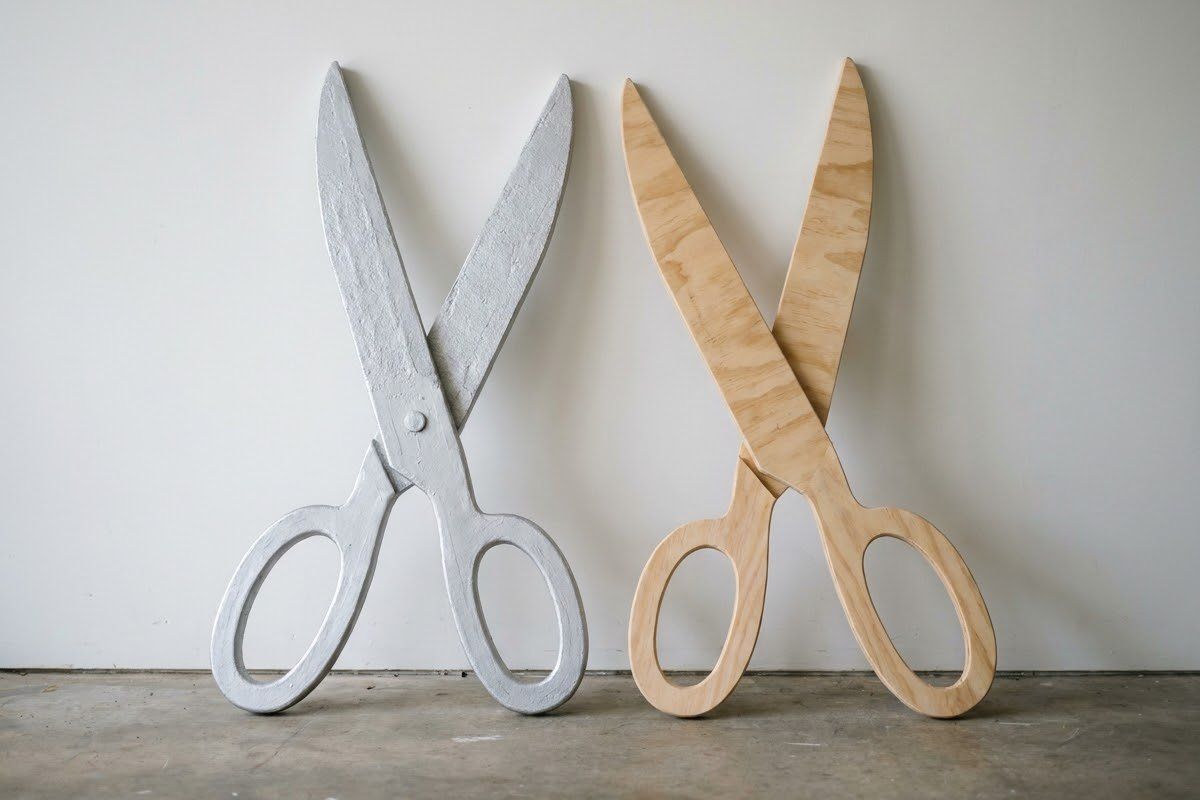
Giant prop scissors are oversized scissors made to look like the real thing, not to cut. They are usually foam, cardboard, plastic or wood. A prop works for photos, stage sets and displays, but it will not cut a ribbon, so use a pre-cut ribbon or a second pair if the cut itself matters.
Part of our guide: Ribbon Cutting Scissors: Types, Sizes and How to Choose
Giant prop scissors look like ceremonial scissors in a photo but are not made to cut. This page helps you tell a prop from a real pair and decide when a prop is enough. It supports our ribbon cutting scissors guide.
What are prop scissors?
In theater and film, a prop is any item on the set other than the costumes and scenery. Prop scissors are built to read as scissors from a distance. They are light, safe to carry and usually cheap to make, but they have no cutting function. They are one of several things people mean by giant scissors.
Foam, cardboard, plastic and wood props
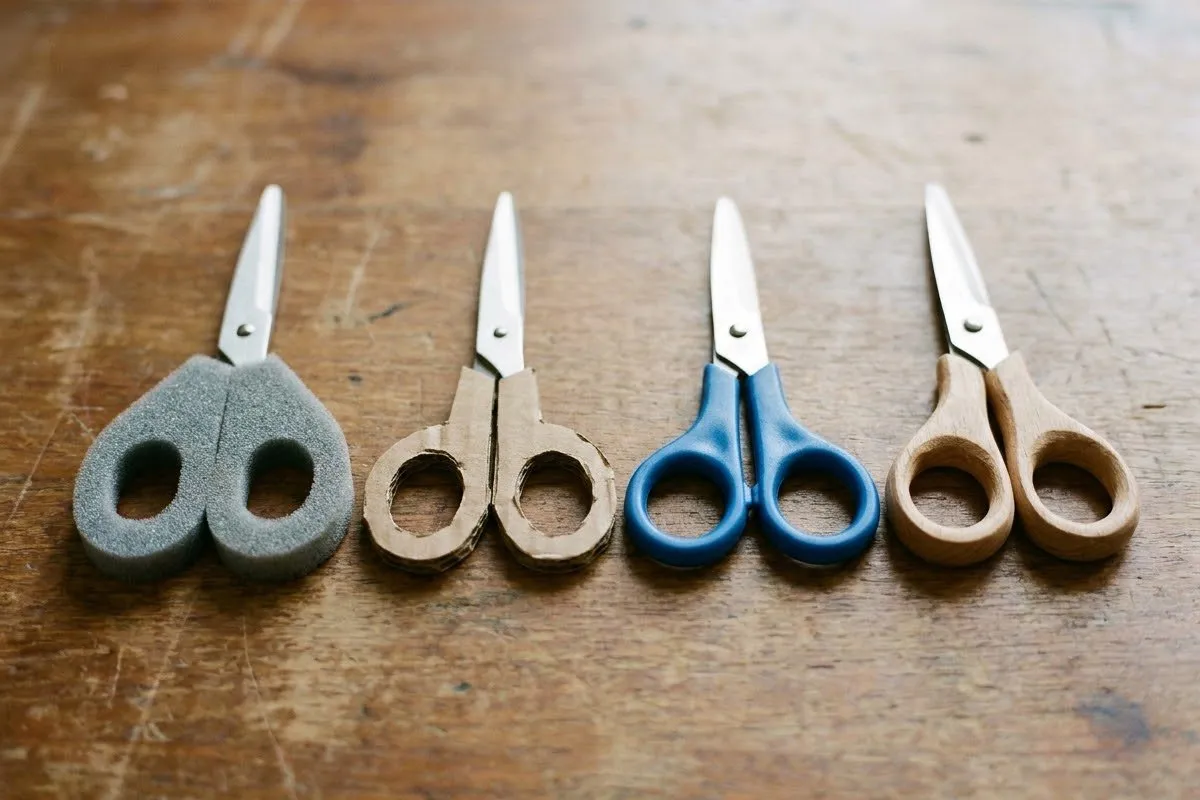
Foam is the lightest and softest. Cardboard is light but fragile. Plastic is smooth and can be shaped. Wood is rigid and can be painted. See the table above, and for how materials behave, what ceremonial scissors are made of.
When is a prop acceptable for a ceremony?
A prop is fine when the look is what matters: a photo, a stage set, a display in a lobby. It is a poor choice when the cut itself must happen. A common solution is a pre-cut ribbon with a hidden join, or a second pair of ordinary scissors for the final snip. Whichever route you choose, tell the people holding it what to expect.
Making a prop safe and sturdy
Round off the tips, avoid sharp edges and loose pieces, and check the pair does not tip or fall when set down. If you build one, use materials that do not splinter. CPSC’s sharp point test in 16 CFR 1500.48 applies to articles intended for children under 8 years of age and tests accessible points, which is a reminder to check points on anything a child might hold. Read the safety page for more.
How do you tell a prop from a real cutting pair?
Look for a plain statement that the blades cut, a metal blade and a stated weight. If the listing says decorative, display, foam or wood, assume it is a prop. If it says nothing, ask. If you find an unsafe product, CPSC takes reports through saferproducts.gov.
A short checklist before you use a prop
- Say plainly to everyone involved that it is a prop and will not cut.
- Check the tips and edges are rounded and nothing is loose.
- Decide how the ribbon will actually be parted, such as a hidden join or a second pair of ordinary scissors.
- Make sure it can stand or rest without tipping.
- Plan where it will be stored so it does not get crushed.
Common mistakes
- Using a prop in a plan where someone expects a real cut.
- Leaving a rigid prop on a stage edge where it can fall.
- Giving a child a heavy wooden prop with hard corners.
- Forgetting to tell the photographer that the pair is not real.
General information only. Follow the maker’s instructions and your venue’s rules.
| Feature | Prop | Real ceremonial pair |
|---|---|---|
| Purpose | Looks like scissors in photos or on a set | Symbolic cut at an event |
| Blades cut? | No | Sometimes; check the listing |
| Material | Foam, cardboard, plastic or wood | Usually metal, sometimes finished |
| Weight | Light | Moderate to heavy |
| Risk | Low, but check points and edges | Real edges and points |
Use a prop when the look is enough. Use a real pair when the cut must happen, and keep a backup either way.
People also ask
Can prop scissors cut a ribbon?
Generally no. Prop scissors are made to look like scissors, not to cut, and their blades are foam, cardboard, plastic or wood. If you want a cut on camera, pre-cut the ribbon at a hidden point, hold it taut and let the prop finish the moment, or keep a pair of ordinary scissors ready to complete the cut.
What are fake giant scissors made of?
Most are foam, cardboard, plastic or wood, often painted to resemble metal. Some have a metal frame inside for strength. The material determines the weight and durability: foam is light and soft, wood is rigid and can chip, and plastic can crack. Check the listing and the stated dimensions before you buy or build.
Can I use cardboard giant scissors at an event?
Yes, for a display or photo, and as a short-term prop. Cardboard is light but weak, so keep it dry and away from wind. It will not cut a ribbon, so plan a pre-cut ribbon or a second pair of scissors. Keep the points blunt so nobody is poked while the prop is carried.
What is the difference between a prop and a ceremonial pair?
A prop is made to look like scissors, and in theater and film a prop is any item on the set other than the costumes and scenery. A ceremonial pair is made for a ceremony and may have working blades. Both can be oversized, so ask directly whether the blades cut.
Are prop scissors safe for children?
Soft foam props are low risk, but points and edges still need a check, and rigid wood or plastic can hurt if swung. CPSC's sharp point rule covers toys and articles for children under 8, so a pair sold as a children's item is tested differently. Supervise any child handling a prop, whatever it is made of.
Further reading
- Dictionary.com: prop (dictionary.com)
- eCFR: 16 CFR 1500.48, sharp point test for articles for children under 8 (ecfr.gov)
- U.S. Consumer Product Safety Commission (cpsc.gov)
Worth reading next
- Ribbon Cutting Scissors: Types, Sizes and How to Choose
What ribbon cutting scissors are, how standard, large and giant sizes differ, which blades really cut, and how to choose a pair for your opening.
- Ceremonial Scissors Explained: What They Are and How They Work
What makes scissors ceremonial, whether the blades really cut, what parts they have and how they differ from ordinary scissors, in plain language.
- What Ceremonial Scissors Are Made Of: Metal, Plated, Wood and Plastic
Metal, plated, wood and plastic ceremonial scissors compared, what gold plated and gold finish mean, and which material fits which event.
- Giant Ribbon Cutting Scissors: How Big Is Big?
How big giant ribbon cutting scissors are, why big, large and huge mean the same thing, and how to match size to viewing distance, weight and handling.
- Giant and Big Scissors: Types, Sizes and What Each Is For
Giant and big scissors can mean ceremonial pairs, props, craft pieces or heavy shears. Learn the types, how to tell them apart and what each is for.
- Grand Opening Scissors: Choosing for a Business Opening
How to choose grand opening scissors for a shop, office or restaurant: size for the crowd, indoor or outdoor use, ribbon pairing and an items checklist.